10,000 Words with Build
Process Journal: Edition Four
April 19th 2011
Often when we conduct interviews for each edition of Process Journal, the result is an inspiring and in-depth conversation that looks behind the scenes and at the inner workings of our selected designers/studios. However once transcribed, these comprehensive interviews usually range somewhere between 8–10,000 words. Whilst we obtain all of this brilliant and insightfull content, this presents a great challenge to us; to reduce the word count down to fit in the printed publication (usually around 2,500–3,000 words per feature). This is a real shame, because as much as we would love to print a 1,000 page publication, it is just not feasible.
So, as part of our website relaunch and our ‘hybrid’ publishing model, we came up with the idea of our online library, where word count is irrelevant. This gives us a platform to publish extended versions of our interviews, that would have otherwise not seen the light of day.
For this paticular piece, we literally travelled around the world all the way to freezing cold London. After landing and an hour long train ride, I arrived at the studio otherwise known as Build. I would like also like to extend a big thank you to Michael & Nicola for taking the time, and inviting me into their studio to conduct this interview.
Interview With: Michael & Nicola Place
Interviewer: Thomas Williams
Further Reading: www.wearebuild.com
—
TW What were the original goals for Build in the beginning, and how different are they to what Build is today?
NP [To Michael] I think that's one for you, because you were the one who started it up.
MP Yeah. It's very different because… I was talking to someone else the other day about this, but when I started the company, Nicola was working at Sony doing video games and getting paid very well for that, and so it kind of allowed me to get the studio up and running without the pressures of having to perhaps make a lot of money to keep the studio running.
NP Yes, no commercial kind of pressures...
MP No real cuts, so in the short term it was, you know, kind of more of an experiment – get the work kind of up and going… it was quite a luxury, really – the studio – to start off with. So, in the beginning it was about getting our name out there, doing work that perhaps got us noticed or without the constraints of the financial side. And then Nicola joined in – [to Nicola] when did you join?
NP 2006. Full-time. I mean, I used to work, sort of, as in keep an eye on the admin side of things so I would sort of be working unofficially part-time, if you like. But in 2006 I joined the studio properly, I left my job, and I started working with Michael full-time. And that's when we had to sort of take stock and actually think about what are we going to… how are we actually going to make this work as a proper commercial studio?
I mean, I still think that we've been very on the experimental side of that for a long time as opposed to going all-out commercial. But certainly… it is certainly a big change, in terms of how we even just sort of ran the studio and sort of put things like processes in place, try and make things as simple, or as easy as possible as opposed to the sort of more, if you like, random, haphazard methods that Michael had been running it as. So that was 2006.
MP And I think it's… as Nicky said it's more commercial, I don't think the work is more commercial… it's the studio that's run more commercially. I've been working for twenty years – left in 1990, from Newcastle College – I think we've pretty much always been the wild card side of things. And even being down here (London), I still think of us as slight outsiders.
It could be because we're not in amongst all the other studios in Shoreditch, we made a sort of deliberate choice to stay away from that 'scene'. I think that was a hang-up from being up in Sheffied with the Designers Republic, still not a London agency, I'm originally from the north of England, and I really like that kind of being a little further out from everybody else.
So, to get back to the question, I think we're at the start. I just didn't have a clue or was remotely interested in the business side of design. I think we're much more in tune with that now, Nicola has brought that side into line. I used to think, oh yeah, boring old business, you know. But this enables us to keep doing the work that we do, and that it's really important… so I think we're much more of a commercial studio, and that's great because I love doing the commercial side of design now. We used to do a lot of self initiated work, and we don't really do much of that anymore, because we're just really enjoying the commercial work.
So, I think at the start it almost ran as a hobby, if I'm being really honest, and then, into what it is now, a much more commercial entity, we're much more client-focussed, you, but still within our way of designing. The people that we tend to work with, and for, appreciate the kind of work that we do, it's not so one-sided. It's a good conversation between us and the client. So start – hobby; today – commercial and focussed [laughs].
TW Yeah. Great!
NP Unlike your answer.
MP Yeah! [laughs].
TW That's the short answer.
Since establishment what has been singularly the most important piece, or project, for the studio and why? Not necessarily financially, but for the, I guess, the progression of the studio?
MP What do you think, Nicola?
NP I think that's really difficult. I think, um… [long pause]…
MP I think at the moment, [to Nicola] just whilst you're thinking, I think that recently we did the 'Sustainable Futures' thing, where even though that was something different for us I think has been really interesting.
NP Mm.
MP I could just reel off a few. I think Not for Personal Use was quite a big one, with Generation Press.
NP I think, just in terms of recognition, I think that the 'Symbolism' print is one of those things that people see and they go, oh yeah, I didn't realise that was Build, or, you know, it's a piece that a lot of people recognise. That was just a self-initiated piece, and we actually haven't done – commercially – haven't really, kind of, gained from it. It's just a nice piece. But it's one of those things that I think is quite …
MP I think it struck a chord …
NP Yeah, it struck a chord.
MP … with quite a few people
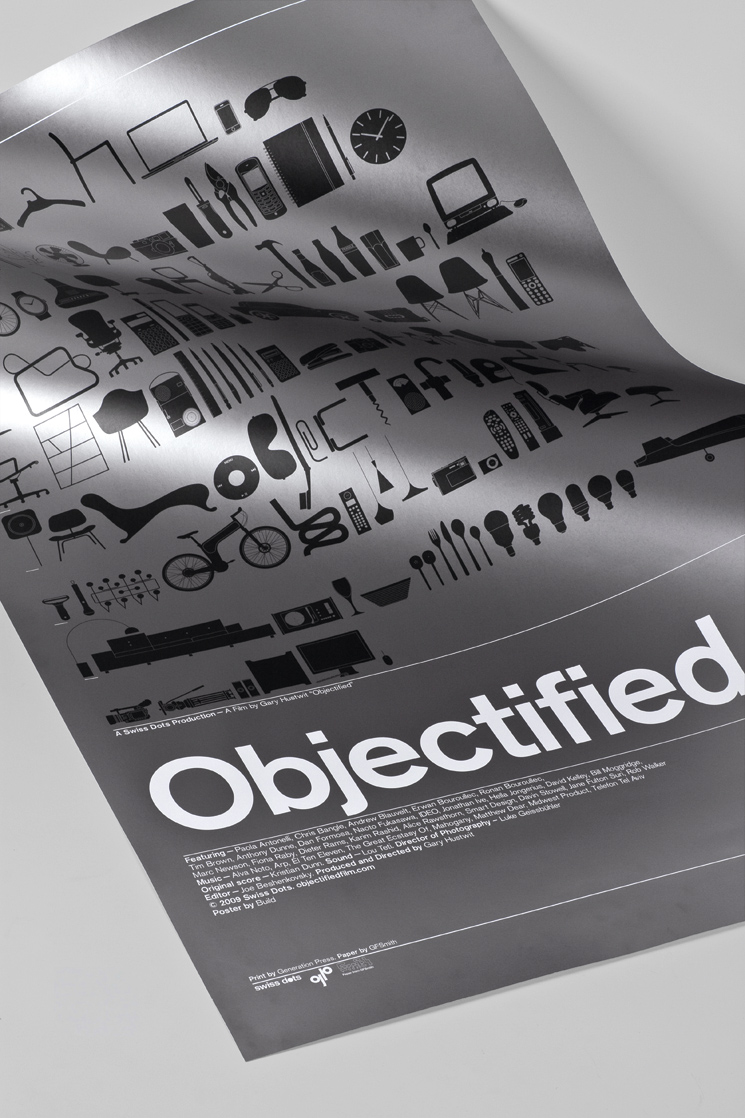
NP On a more commercial side, I would say probably 'Objectified'. The work for 'Objectified' is probably a more recent piece that a lot of people recognise – because obviously it's quite a high profile film, certainly in the …
MP In documentary film-making, definitely.
NP … in the industry, yes.
MP Yeah.
NP So, that's the piece that I think is probably – I wouldn't say it's the most important – but I don't know if there is a singularly most important piece.
MP Mm. Yeah, I think it just goes by years. Like Sony – I think at that point it was 'Not for Commercial Use' because that was something that garnered a lot of attention… it also got quite a bit of press and a lot of people talking in positive, and negative terms, and I think that's the sort of thing that our work tends to do, I think. It's never halfway house, you know what I mean, it's always kind of … it's either people love it or hate it.
And I think that's … So yeah, in terms of … Yeah, I kind of agree, 'Symbolism', I think, was a good one; 'Not for Commercial Use', I think, is a good one. One that I think may be slightly under the radar is Simple Records. We did a compilation, 'SiMPle Sounds', which I personally think is a really lovely piece.
Yeah, it's really hard to sort of pinpoint one project. I might get back to you on that. Maybe I'll have a rethink!
TW Yeah, of course, no problems.
For the most part Build has been a two-person operation. What have been the advantages and disadvantages of this?
NP Well, the main advantage is of course that we just have to manage ourselves, and we don't have to worry about keeping anybody else happy, in short. And it also means that you're not having to think, 'goodness, we've got to pay six people this month. How do we do that?' You don't have that associated stress that comes with managing a bigger studio.
The disadvantage is, clearly, when you need to have people working with you, then you've got to plan ahead and you've got to get people on board before the projects kick off. We've always managed to do that, and that's always been a … we've found that that's worked quite well, so sometimes we'll have three … [to Michael] I think at most, we had three other people in here, didn't we?
But it means you have to plan ahead a little bit, and that can make it difficult for somebody to turn around and go 'we need this for the end of the week'. You are like, 'well, we haven't got the resources to just drop everything to just do everything for the end of the week'. Because, you know, even if you're working with freelancers, you know, you have people that you like to work with, and they're not always available. So that's, I think, one of the disadvantages.
But you balance it, and we are looking to hopefully take on a couple of people permanently early next year. But with that will come, you know, all the other things that you have to think about, like managing the people and all the admin that comes with that. But that's just part and parcel and, you know, it's just one of those things you have to take into account. So, I think we will get a little bit bigger and not stay two-person.
MP Yeah, and I think the advantages are that there's that thing of being able to just … I really like thinking and I really enjoy doing so it's that's thing of positive control. I wouldn't really think of myself, for me personally, Nicola might think differently, or other people might think differently, but I'm not a control freak. I don't see myself as a control freak, but I really enjoy being in control!…
We've had people (students/freelancers) in before, and you're looking at something and i'm just going, 'Do that. Just do that', and it'll be fine, but you know, it's that kind of thing… which is something you've got to get over, is directing people, where I just would find it much quicker if I just sat there and did it myself. And I think there is that aspect to it of 'Right, okay, everything that goes out, I can make sure that I'm one hundred per cent happy with it'.
And we've done jobs with people that I might not be one hundred per cent happy with, but because I've had minimal experience of actually directing other designers – I've been working in studios where you're almost like your own mini-team. You work on your own projects and very rarely is it a studio-wide project.
So I think an advantage is exactly that… everything that goes out of the studio, I'm one hundred per cent happy with, or ninety-nine per cent happy with it.
Disadvantages, I think, are purely in business … trying to get bigger work – people are generally less trusting of smaller studios, or they're not going to give you that because they think that you can't deliver because you're only two people, and why would they give you a massive corporate identity job that they think a studio of twelve people would struggle to do?
We work really hard, most people perceive the studio as more than two people. We ask the question pretty much every time when people come in, is how many people do you think's… you know, how many people? And most people say …
NP Most people say six or seven.
NP I think a lot of that is because of the output. You know, the output of the studio is huge, really – certainly compared to the fact that there's only two of us. But obviously, let's say, if we can ramp up and down as we need to, then that helps to get over those kinds of blips when we need to do that.
TW I know you mentioned – it was a little while ago now, but designing your own identity is often considered one of the biggest challenges a designer will face. Do you believe this to be true, and what was the approach of the design and the development of the Build identity?
MP I think it is actually quite hard. It was quite interesting, quite telling really, for instance at Designers Republic they got their identity designed by a company in Manchester because it was just so hard.
We're all visual communicators, yet why do we find it so hard to sum up your own company, or how do you give an identity to your own company? Yeah, I think it is really hard. Though I actually found ours quite easy. [To Nicola] Or did I?
NP What, this?
MP Yeah. I think it wasn't too bad, was it?
NP Yeah.
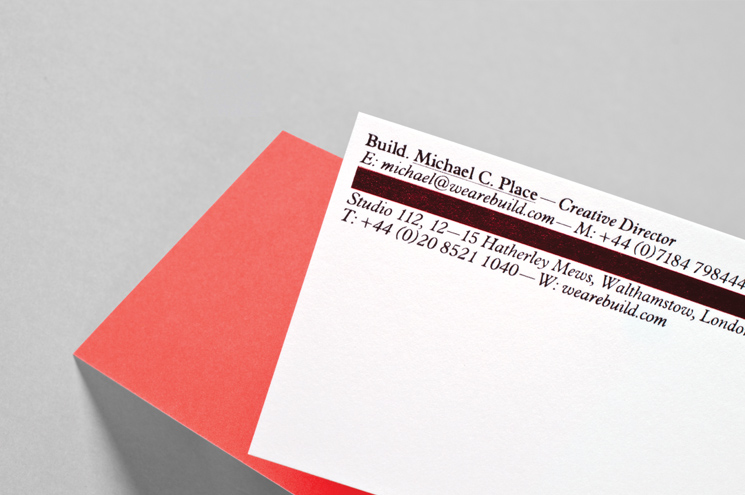
MP I think it's interesting because before, when it was just me, I did the odd business card, and that's fine, make it as difficult as possible for people to read the business card and, where this is much more refined/simple… Nicola is now working with me, so Nicola has to be happy with it. So I found it quite easy, and I just wanted to design something that perhaps was quite different to what we'd done before, what people's perception of what a Build identity would be, what a Build business card would look like.
A funny story is erm … Do you know a guy called Ben Drury? He's a designer, but he does a lot of Mo' Wax sleeves.
TW Don't think so, no.
MP You should look him up, he's still working now – a very good designer.
And he was also one of the people at This is Real Art – he was one of the designers that they kind of had a roster of. Before we met each other, he had this perception of me as this sort of super techno-person, because I did a lot of techno-style graphics at Designers Republic – and he pictured me working in a silver-bodysuit, you know, really, super techno techno! And when we met, he was like, 'oh, you're normal'.
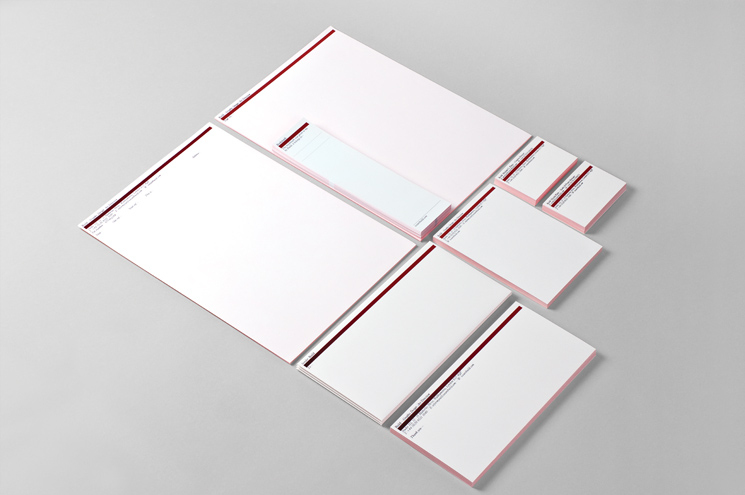
So yeah, with that, I just wanted to design something that could be expanded upon – and that's just that very simple strip – and the idea would be that we would, when we get a reprint, we'll change the colour of it. The book's (Build—Works 1) got the same strip on it… I just wanted something very classic that hopefully won't date. I still really love it. And it's just very plain – not necessarily unassuming, but I think it's just got a real nice class to it. It's classy.
TW It's nice to hear that you still love it after four years …
MP Yeah [laughs].
TW … because every time I design something for myself I hate it the following week.
NP I was going to say that although Michael has said that actually designing initially wasn't so difficult, actually doing the book and the new website, we found very, very hard. It was almost like, that was a very natural thing. The identity in the first instance was quite a natural thing for Michael to do and sort of think, well, how do people perceive me and how do I want the studio to be perceived now? And sort of, taking that approach.
But doing the book and the new website was much more difficult, because that really was … you know, you're giving much more of a voice to the work and to the studio in terms of the coy and the choice of images and how the website functions and so on.
So that was a much, much harder exercise, because it was almost like … that was almost the identity. The original identity was obviously the identity in print. You know, if we're sending a postcard out, if we're sending a letter out, then, you know, it's a very quiet and subtle way of saying something about the studio. The book and the website that we've just done, was much more about us making much more of a statement about the studio, and that was much more difficult.
I mean, I don't know if you … I might have just answered a question that you put.
TW I think you might have answered two questions I've got coming [laughs].
NP What is interesting, I was going to say, is that we both really love it. It's nearly four – it might be more than four – years old. And yet the book that we've just done carries on that … You know, we didn't think, right, we want to take the opportunity to redo it at this point. It was just like, no, it works. It's really, nice, and let's continue it.
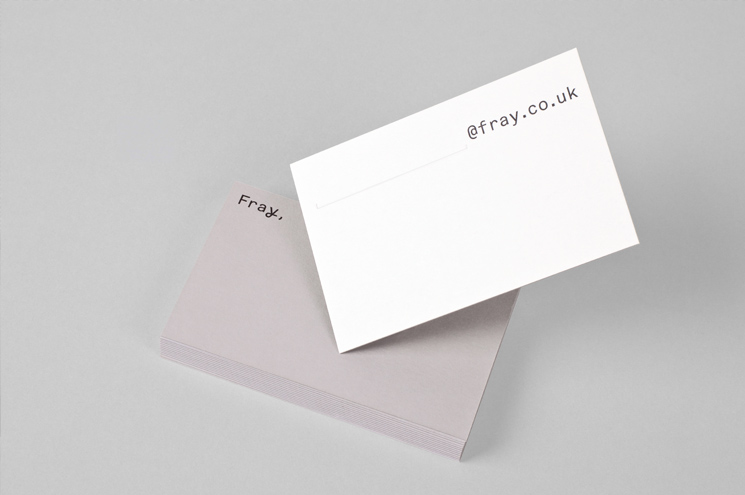
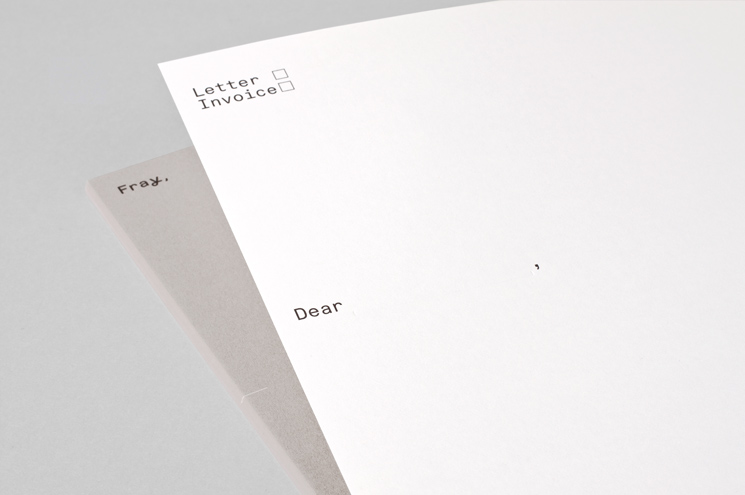
MP I think there's something nice about having the confidence with it as well. Just going no, that's … It's not like I'm saying 'that's the perfect identity'! Possibly perfect identity for us, but I think it's nice that it's consistent, and it is that, you know, that designers strive for consistency – you know, you talk about your posters. I don't think I've perhaps got it that bad, but there is something really nice about consistency. Maybe you've designed it quite well, do you know what I mean? I'm not saying – where you suddenly change your business cards every time – but yeah, I think there's something … Plus it's very expensive and I think that it's one of the most expensive papers you can print on, apparently. That's the paper that the President of the United States has his stationery on.
TW Wow. That's very impressive. Oh these ones? What is the stock?
MP It's called Crane's Crest – it's one hundred per cent cotton. When we spec'd it for the job, Generation Press printed it for us and said 'You bastard, it's the one of the most expensive papers you can buy!
TW You've got expensive tastes!
MP He said most designers quote for it, then they get the quote back and just go, oh we'll just go with a colorplan instead, then. Yeah, It's lovely, and there's something really nice about that story, isn't there? I tell everybody that. But it doesn't fail – i'm probably going on about the identity too much – but every time we give it to somebody, most people just go, 'Oooh'.
TW I was actually – yeah, when you gave it to me, one of the first things I noticed was like, ooh, very nice.
MP [Laughs] And that's all part of it, especially when the big part of what we do is design for print, just to have some shitty or crap stock, or whatever, I think you need to show your intention about what you're about. And I think we went through a lot of years without any stationery whatsoever, and that's ridiculous, really. And then Nicola joined and said, no, we've got to have stationery. And we've got it now, and it's great. We really like it.
TW And so with the double foil on it, does that make your business cards about a dollar each?
MP [Laughs] Probably!
NP Probably more.
MP [Laughs] Yeah. Plus the paper, yeah. Should start printing a price on them, yeah. That's a really good idea.
TW Over the years Build has participated and collaborated in countless design publications, interviews and talks. Have these been beneficial for the studio beyond the reputation within the design industry and sector?
MP I think that's very well put, and it's something that we've kind of realised – and maybe we've been a bit stupid – is that it's amazing to be respected by your peers, and we seem to have a lot of that – and I'm not trying to be big-headed, I'm not a big-headed person – and I think that's great, but I think we realised that that doesn't make you any money. That doesn't help you … It's great, like I say, I'm genuinely amazed by the response within the design community that we get …
TW Sorry, I might just interrupt you for one second – just with the following question, I might wrap them into two. How important is the perception of your studio amongst other designers, and does a good reputation ultimately result in a more successful business?
MP In answer to that second question, sure, we could talk about it, but I don't think it does. I don't think it …
NP No.
MP Not at all. Not at all.
NP At the risk of sounding … I was going to say obnoxious, but that's not the right word, but … like Michael said, I think people perceive us as being a bit arrogant, but no, we're not. I don't think we are. But at the risk of sounding slightly arrogant, I suppose, it's really nice to be admired, obviously, and it is amazing, and we've met a lot really nice people who are just genuine admirers of the studio, and that is brilliant.
It gets to a point where actually what you're finding is that there's lots of young designers. It's brilliant – they're working in bigger studios or in-house in a design team, and they admire the studio, which is great, but what you see is a lot of the work starts to get … I mean, I know it's part of the industry that people will naturally see stuff and they will be inspired by it and they … you know, it's part of the creative process. But sometimes it's quite hard for us, in terms of the success of the studio, is actually, you start seeing …
[Doorbell interrupts conversation]
Yeah, so you have this kind of band of admirers, if you like, people who genuinely really love the studio's work. But it doesn't necessarily make for a more successful business because what you tend to find is that those designers are working in either another design studio or another in-house thing and there's a lot of inspiration suddenly finds its way into … they might be working in a much commercial sort of area. And then we have found that – this is what I'm saying, is, I'm sort of slightly nervous about sounding arrogant – is that when you see stuff it's clearly been copied.
TW I'm glad we did that wrap before I saw your book!
NP & MP [Laughter]
NP That's been done before.
TW No, I know.
NP It's not something that we've done new, either. But yes, there are things that we've done that you might say, well, yeah, that's kind of inspired by… Let's say that I think that is part of the creative process, but sometimes you do see stuff that we might have done stuff that is kind of really, really … it might be, like I say, a self-initiated project or something which hasn't been used in a really commercial way suddenly finds its way into a more commercial outlet through somebody else. And then what you find is that potential clients are going, well look, they've copied them, because they'll see the bigger commercial piece first.
So, as I say, I'm really nervous about sounding really arrogant, and I'd like you to – not to put that down word for word, but the point is that it doesn't make for a successful business because we're not operating in a really big commercial way yet, and a lot of what we do is kind of honest and genuine, if you like. And in some cases, there might be projects which we haven't applied to that kind of commercial world. Does that make sense?
MP Yeah, I think so, yeah. I mean, I think in some ways, I don't think it probably is quite as black-and-white as now.
NP Yes.
MP He asked another designer, and the designer said oh, you should be talking to these guys, so that's obviously …
NP Yes.
MP But I think in some ways, you talk about visibility, and I think obviously it's good to be talked about, in good and bad – I'm really happy with the good and bad, I think that's fine – and I think it is that visibility. I think if people are talking about you, it's got to rub off in a good way, at some point somewhere down the line. I'm a firm believer of trying to be as nice to people as possible.
We're in a fairly privileged position, but that's through a lot of hard work … I live in hope, and I think it has happened that one day somebody, perhaps that was a student then that I replied to an email in positive way, and that they suddenly become a commissioner for a piece of work. What goes around comes around, definitely.
NP A really good example of something that Michael took part in that he really didn't want to do was being interviewed for Helvetica, the film. And countless people have come back and said 'Where can I buy that mug?'
MP [Laughs]
NP Where can I buy that mug?
But other people have said 'I saw you in Helvetica and I'm really interested in talking to you about doing some work for us'. So, I think that it does happen, you know, and, like Michael says, having a profile at all in the industry does have benefits. But I think it does take time. We haven't actually done anything for probably a couple of years.
MP Yeah, I was saying to Thomas earlier that we kind of put a curb on all sorts of talks, just trying to focus on business, get the business side of things sorted and happy with, which we're kind of getting there, the culmination – or a good – point is the book.
I don't think it is as cold as now, but I there are positives and there are negatives, and I think perhaps in the complete sense of dollars or pounds, in terms of business output, then I don't think it's really beneficial, in the cold, hard business side of things. I think it's very unusual for a head of a big company who's got no real sense of design to know who we are, or anybody, just by looking at a load of blogs.
NP But on the other hand, you might have young designers who are inspired by work, you'll equally have other young designers who will recommend us to maybe their kind of senior, or somebody who's in charge of marketing or whatever. And we have had a few instances where people have said, 'oh, you know, a designer really likes your work and they've recommended that we speak to you'. So that has happened, so yeah, there are definite benefits.
TW Great.
[To Michael] After working at Designers Republic and as founder of Build, the name Michael C Place has almost taken on its own sense of identity and created a personification of the studio. Has this been intentional, and has this been advantageous to Build?
I might just continue on that – I guess also that this is sort of my, I guess, outside perception …
MP Should be interesting!
TW … and I guess from seeing your work over the few years, and I guess that's almost the perception I get. I'm not sure if that's how you feel about it as well, but I thought it would make for an interesting question because I believe, where I come from, that has occurred.
NP Can I just stop?
MP Yeah.
NP That's really interesting, because we talked about this not very long ago – a lot of the self-initiated work that Michael is talking about is done as Michael C Place. And there's a lot of that stuff that, you know, he hasn't done for a while. And we were talking about how that sits with Build, and think it is really important that Michael's work is seen as separate, and it does have its own identity. And that is something that we'll probably be looking at kind of making more of again, in the future.
MP Yeah, I think it has been advantageous as well, in that I think it's actually quite good to have people put an actual name or a person or a face to the studio. And I think it's been advantageous and I think it's been disadvantageous. At the start, I think it was quite advantageous, you know, it's that thing of the unlimited Designers Republic, even though a lot of people knew who did what there, but generally all work was done behind the tDR curtain.
And then obviously, stepping out of the shadows, I guess, suddenly, something that I was not very comfortable with at the start was suddenly, right, here's my voice, this is me now. It's not necessarily all about me, but you know, you have to promote the studio, you have to talk to people, you have to basically put yourself out there. From anonymity to suddenly being in the sunlight.
It's something that I made myself do, actually promote myself, for a change, in the interests of getting the name out there… I've always signed myself MC Place and it's quite weird – I always think Michael C Place sounds quite poMPous when you see it there. But it's purely a family tradition, and I'm proud of our family, and the tradition is that I've got my dad's (Christopher Place), first name becomes your middle name, it's always been a family tradition, so I'm quite proud. That's why I always quite like to put the 'C' in, so it's 'Christopher'.
And I think it's become this persona, or this … it's almost like a brand, isn't it? It's weird. It sounds really odd, it sounds like The Apprentice [the TV show].
NP My own Michael Place, the brand!
MP [Laughs] But it's got to the point where I was at a degree show a couple of years ago, and this person came up to me and said, 'Are you Michael C Place?' And it was like, oh god, yeah, just Michael will do, you know. It's just this weird kind of thing!
I think it has been advantageous in terms of at the start. We then went through this discussion that Nicola was saying of we don't think it's really healthy for a studio to be almost perceived as just one person, because that isn't going to be good for business if somebody thinks, right, all we're going to get is one person doing the work.
… it's always Build, trying to talk about Build, rather than MCP, and as Nicola said, I think for the self-initiated stuff that we've done in the past that we're hoping to do a bit more of when we get the time, that will almost be the kind of, you know, the Scale Series – have you seen the Scale Series? – they're just big dots, different colours, but showing a different scale. That's just pure, just very self-indulgent, I think, completely. That's just me, you know, with no commercial restraints, just doing stuff, you know. That, to a certain degree, is that. And I think doing that side of the stuff is a good thing for a studio. I think it is a good thing.
In essence, it's your studio's stab at that, isn't it? You've been able to do something that perhaps will put you in a different direction, hopefully, from the work that perhaps you're doing at the moment. And we've used it for that same kind of thing.
But then, I think, it's almost like … Are you aware of a studio called Browns?
TW Yes.
MP So you've got Jonathan Ellery, who is the Creative Director at Browns, and then you've got Browns, and he separates himself – His arts side is Jonathan Ellery, and his business side is Browns. So it's pretty much that, it's that side of art and commerce, we've just tried to separate it, haven't we, and I think it's working now. I think people talk about Build more than they do Michael C Place, hopefully anyway. Because that's the way I'd prefer it to be, because it isn't just me. Nicola's an equal partner… I couldn't do it without her, and she couldn't do it without me, I'd like to think so anyway! [Laughs].
NP Which takes us nicely to the next question, I believe.
TW Yes. Beyond graphic design, what typically do both your roles include?
MP Can I just do this very quickly? I design and Nicola does everything else.
NP That's it, basically, yeah. Michael is the designer, and going back to earlier answers to one of the questions is that in the early days, Michael was just doing design and not much else. So it was a little bit chaotic, or a lot chaotic, and I was just trying to run it from a distance. Our roles very much are creative director/designer and everything else. I do have creative input in some of the projects. It depends what the project is, and typically I will go and talk to clients and take on a sort of account manager or project manager role, and depending on the project, I will sometimes have a very creative input with Michael. And then that does its natural thing, it evolves into the output of that project.
In other cases, it's just, you know, I might talk to somebody initially. I might have a very cursory project management role and the rest of it is purely down to Michael to oversee and work with the designers and manage the output. So that's it, in short, but obviously being a small studio, we do have to wear different caps. We are wearing … this is what happens with any small studio, and if we were a studio of fifty people, there would be one person to do each of these roles. But it doesn't work like that.
MP You have many caps and I have one [laughs].
NP Yeah. Yeah. That is true, actually, yeah.
MP Nicola is Accounts, she's IT, she's everything.
NP I answer the telephones, I find the people when we need them, so recruitment agent.
MP I think I've got two caps – I've got design and music.
NP Yeah – music.
MP Beyond graphic design though …
NP I think that answers the question, but I think it's interesting that you sometimes find other studios where you've got two creatives and they will equally share the non-creative work, the admin work, or whatever. But our split is very defined – and there are other studios like that, who work like that.
So for some people it work really well, and for other people it works to have more of an even split of the roles, but I think that just depends on the people. You know, if you've got two people at college together, they might be, 'Yeah, wouldn't it be great to run a studio?' They're naturally going to find that they're going to be focussed on the creative work and then they go, 'Oh, we need to do this, and we need to do this, and we need to do this', and if it works well, we should be sharing that work.
But likewise, you've got the people who naturally have more of a business and production role, and the other is more of a creative role.
TW As you mentioned, when people leave university or college, and I know that when I finished a lot of people – two graphic designers will go off and start a business – that business side of it is just as important as doing the design.
MP Definitely, yeah. Absolutely. I mean, getting your business sorted is …
NP And I think there's been many cases where that's worked very, very well. And I think also where you've got designers coming out of college these days, certainly not all colleges – some students we see, they're just really are clueless – and that's a lot to do with the colleges that they come out of, and their expectations, and they're just not prepared at all.
But equally, there are a lot of very bright people coming out, and they've got really good support from the colleges, and they might go on to do an MA or whatever, but a lot of them are coming out with a normal BA, and they've got a lot of support, and they know where to go to get help, and they do really, really well. They're very bright, and they just get the right help straight away, and they're very successful.
So, you know, it can be done, but I think there is an awful lot of students, unfortunately, who … they're just, not just clueless, but you just think, goodness … you see some people and they'll come in to do a portfolio show or whatever, and you just think, my goodness, you're not even ready to actually work in a studio, never mind actually run your own studio.
And some people say, 'Oh yeah, next year I'd really like to start my own studio', and it's just like, my god, I don't know how you're going to do that. But each to their own.
TW How does the studio typically commence and approach a new project? Is there a defined set of processes, or does this adapt and change depending on the project or client?
NP It totally adapts and changes, yeah. I mean, it goes back to what I said before. Sometimes … typically, I'm the first port of call – typically, but not always. And so people might say, 'Oh, I'd really like to talk to you about working on this project', so I might go and meet that client or they might come in here and meet both of us. And then we'll talk about the logistics as well as the creative, and then they might then just talk to Michael.
MP I think it's weird. I think a lot of the – a big part of the difference can be the people that you're working with. So I think you kind of have to fit yourself around how the client works. And we've got one on at the moment – I'm certainly not going to name names – and it's just incredibly difficult to try and pin him down to anything. You're constantly chasing, and you're constantly backwards and forwards.
And then some people are very straightforward and are very easy and, whatever, and I think yeah, everything's different. Every time's different, pretty much, with a few exceptions. Some go incredibly smoothly and some are just incredibly difficult. Yeah, so they just change, don't they?
NP Yeah.
MP I think it's just the way the dynamic between the way Nicola and I work together and how we work with a client changes all the time. As Nicola says, she might do very minimal contact and then everything's over to me, but at some point there's a hand off and sometimes that's a very clean kind of hand off, where Nicola has … You know, the print comes back or the job comes back and that's the first time she might see it. But then there's a lot of times where, going back to an earlier thing, there are certain projects that we do, where Nicola has a big input in terms of the creative aspect as well, you know, because Nicola's trained as an illustrator or Graphic Designer.
NP Yeah, Graphic Design and Illustration.
MP So she's not purely business. So she's very … running the team at Sony for Wipeout, you know, the lead artist on that.
TW I saw that video you posted on YouTube a little while ago.
MP Yeah, it's amazing, isn't it?
NP So I've got a very creative background, is what Michael's saying. So my creative input would be creative direction, as opposed to designing. I'm not a graphic designer. I couldn't sit there and actually do the work. I can tell people what to do.
MP No, it's great, on certain projects, I'll get stuck and sit down and work it through with Nicky. Every designer, I'm sure at some point, you're just like, Jesus, I can't crack this one at all. It just takes somebody else to come along and go, Why don't you think about this? So it's quite an interesting dynamic in terms of the creative and the kind of roles in business and the roles between us – it's ever-changing for the project.
NP I was going to say that if you've got a job which is, say, production-heavy, then I'll usually have quite an involved role because obviously we've got to work out the logistics of production before we can actually start to think about some of the design issues. So then I'll be quite heavily involved at the beginning and writing specifications and so on. That can be more my response to a project that's production-heavy; it might be more my responsibility than Michael's and whatever.
But I think the beauty of being in a very, very small studio is that we are allowed to do that, and we can be adaptable, we can adapt to whatever the client's needs are. And I think if we were a big studio – and I'm, talking 20-30, possibly more – when you have a big studio like that, it's inevitable that you have to have certain processes, you have to have certain systems that you work within to make those teams really efficient. And I think that's when clients will probably kind of think, well, actually, I don't really want to work like that – and I'm not speaking from first-hand experience…
MP Yeah, I think we can be much more dynamic, can't we? We can be much more dynamic in our working practice.
NP Yes.
TW You have recently launched a new website that utilises full-screen imagery and features a unique navigation system. How was the design of the site approached, and was it a challenge to find a balance between un-compromised design and usability?
MP When we launched our last one, the one before this one, which is our first big proper site, I really liked it when we first launched, and then grew to absolutely hate it, like an albatross – it was horrible. And I used to just look at it and just go, oh, bloody hell, plus uploading work to it was a bit faffy, to prepare stuff and not draw round things and put shadows on and all that – it was just horrible.
And it's interesting – I'd never really thought about it – but I spoke to a few people that I respect, and a lot of feedback came back that 'I think you've kind of lost your personality and the website doesn't really show your personality'. And we're not crazy, whacky people, but I think that was very true to say of the previous one, before the current one. So we just wanted to … Full screen images, that's one of my big niggles, is you go onto some people's sites and the pictures are so small, you can't get any sense of what this thing is. It's like, okay, it's got 12 spot colours on but I can't see absolutely none of those. I just see this little, shitty page.
So I just really like the full screen – it's really showing off the work to its best ability, it's showing everything it needs to do. So that's why it's full screen. I think it's great. Full screen images sites I think are really lovely. So, I think that was … the full screen thing is for me and also for the people looking at it.
TW They've really come a long way, the non-Flash full screen type of thing – they're getting much better. I think yours is a really good example of that, which is really nice to see.
MP The non-flash was a massive thing. We just didn't want Flash on the site whatsoever. That was a bit of a bugbear that we just wanted to get rid of, any Flash elements. More and more people are using phones to look at it, so it's optimised for iPhone as well, we need to optimise it for iPads – apparently it looks crap on an iPad – so … I might have a look afterwards …
TW Yeah, of course.
MP I think it is a very interesting exercise in this, because what we wanted with this site was very definitely going for more the commercial …
NP … usable …
MP … usable site. I think the other one was a bit not great for usability. So we wanted something that was very simple, and I think it's achieved that, and it's still an interesting site. It's not just a list… a massive thing is that websites, for some people, people get incredibly cross about new websites, and if it doesn't work the way that they think it should, people just get very angry. And I think that's the democratic side of it. I think people think websites are for everyone – you know, power to the people, it should be for everybody – and I kind of agree with that. But I'm a firm believer that, certainly for our work, if this is how I want our work to be shown to the world, this is how we'll do it. And I don't think we compromised that much.
NP No, I think that what you're getting it is that there are conventions that typically websites follow.
MP … which we tried to do as well, yeah. In certain aspects.
NP Yes, but not in that way of just like having a list on the left and, you know. That is how a website typically, especially if you've got visual material, would work. And we obviously want to challenge that – it wouldn't be right if we just kind of did what would be expected. So, to answer the question, I'd say, yes, it was challenging, to find that right balance, because it was about making the navigation in such a way that people didn't mind that it wasn't in the conventional layout, that it still kind of allowed people to navigate through in a really, really easy way. But that it isn't what they expected.
Yes, it was challenging, and we had some very heated arguments about it because there were things that I felt needed to be really simple, and in some cases, actually make things really, really obvious. And Michael was sometimes still fighting in the slightly difficult corner. And so we had to find that balance that really, really brought the two together. I'd like to ask you a question: do you think it's successful in that way?
TW Yes, I do. I think … well, I guess that forms part of my question – finding the balance between un-compromised and usability. I think when I first saw it, because I know there was a bit of talk on twitter and everything about it coming and all that kind of thing, I did find it very different, but also surprisingly natural to use. I find that I love the keyboard navigation – to me, as a user of the internet. I found that really nice.
And I found it very comfortable, and as soon as I figured out the up and down to hide everything and then the shift across, I think it's definitely one of the more successful websites. Given that I do Process, I look at a lot of designers' websites and spend a lot of time looking at work. Yeah, it was really a pleasure to use and I've enjoyed looking through … Well, put it this way, I've looked through more of your work on that website than I had your old site.
MP Yeah, definitely.
NP I think with the old site, not to dwell on it too much, but it wasn't intuitive. And a lot of people just thought that all they saw on the front page was all there was to see. It didn't invite exploration, I don't think.
TW The one thing I remember when I saw your first website, which was many years ago, I admired it for how different it was. I thought it was really nice that it sort – as you said, it's not the standard, with the list, the images here, next button there – I quite liked the interactivity of it. But I can certainly relate to what it's like when you've designed something. But to answer the question, I really like your new one. I think it's great. I wouldn't have put that question in. I would have avoided it!
NP & MP [Laughter]
TW As well as a new website, you have just released a new book titled Build – Works (1). What was involved in the design and curation of the publication?
MP Again, I think that was almost like what we wanted to do with the book is, again, it's … I'd see that as a very commercial piece of design. Basically, what happened was we wanted to design that's purely for new business, so that its intention, that's its purpose. It's not intended to be a bit of porn for designers. It's purely intended for the access of information really easily by prospective clients.
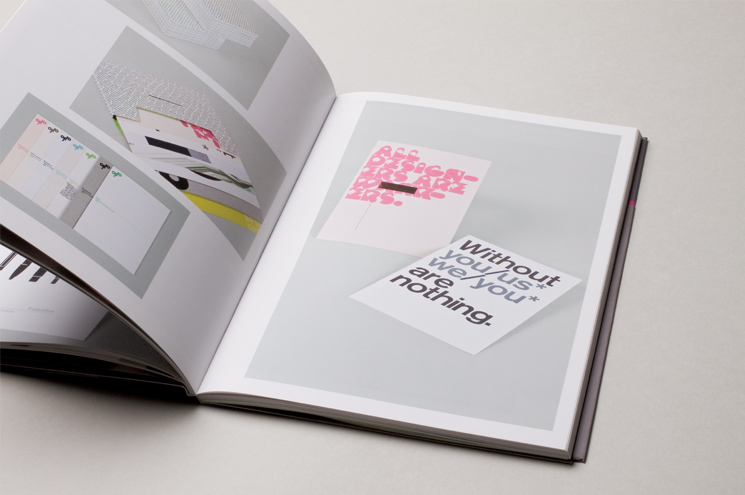
So what we did we designed the website first, and then we almost … In some ways, you could almost … which is when we handed the artwork to Scrub at Generation Press, he's a bit like, well, aren't we just printing the website? And it's kind of a bit like that. It's almost like a printed website – so using all the same photography, we got a guy in to do all that.
I think it's a commercial book, It's all about getting new work. That's it.
NP I was going to say, it was kind of, not designed in tandem with the website, but it was always in mind when we were doing the website. So we had to focus on the website first. But we knew that we were going to be moving on to the book straight afterwards. So the book was curated in that it took its lead from the website, and like Michael said, in a way, it was just like, it is a printed version of the website, but not strictly speaking, because obviously the website is going to evolve, we're going to add work to it, and the book doesn't.
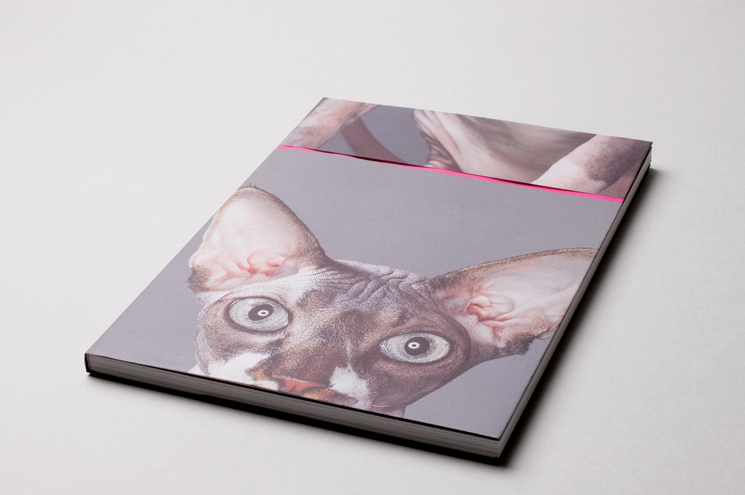
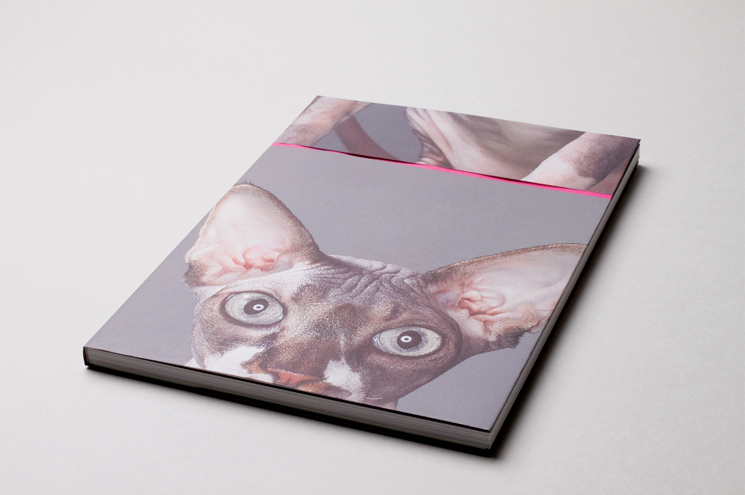
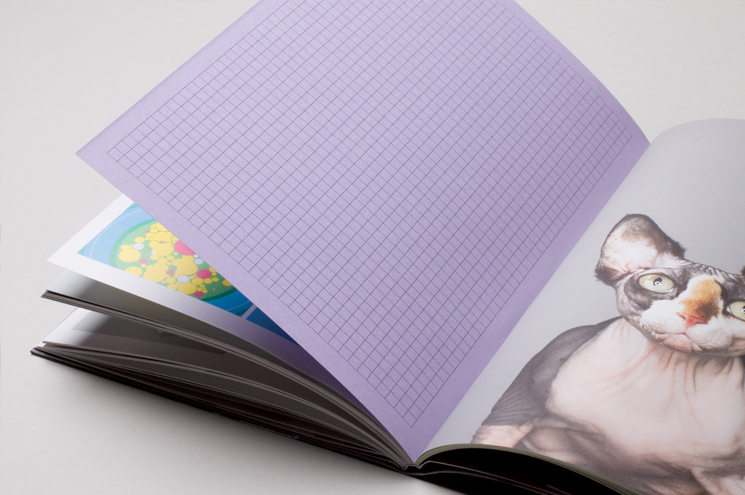
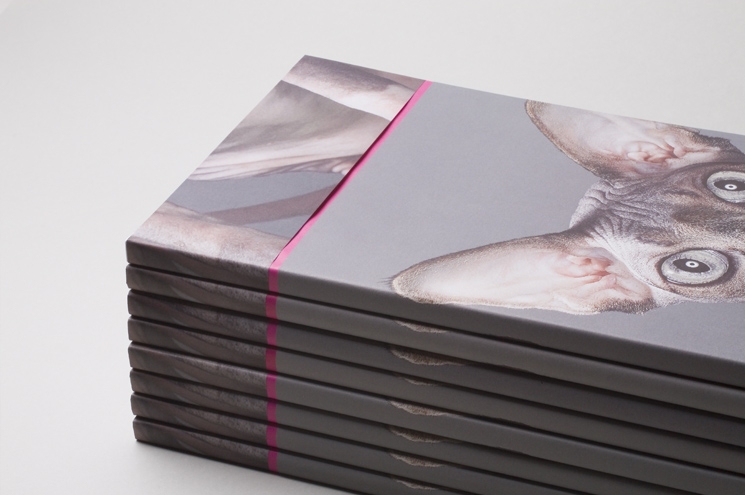
And that was partly why it's not just a straight thing – it's got all these other little bits and pieces in. So it's a little bit … obviously it's a lot more tactile and it's not … it's presented in a way – so you've got these incidental pictures and pictures of the cats – so in a way, that does reflect the content of the website, but presented in a more tactile way because it's a physical object.
MP And we wanted obviously to show what we do as designers, and the understanding of print and the understanding of stocks and all the things to make it a pleasurable experience, and it wasn't supposed to be … you know, when I say it's a commercial thing, it was never intended to just be, as you can see through there, it's not print for sale. I guess what I was trying to say is that, you know, you've got different stocks, you've got different processes. So it's designed as an object, designed as a beautiful object, as well as on more of the commercial aspect of things, I guess. I didn't want to make it difficult for people. And I think that's probably … I think if we were to do a … which we've been asked and we've had to say no to a Build monograph, and I think that'll come further down the line – that thing would be very different to that [referring to Build – Works [1]].
Essentially for that, for instance, we got a guy in to design that. Because we kind of knew that if I did it, it would be a very different thing to me directing somebody else, and Nicola's input as well. So it was intended to be very much a … a very accessible project, a very accessible book, and I think it's been quite successful in that. But it still shows … it's still got the character of it, and it's still got the aesthetic, and I think it's still a really nice object to have and to hold. I think it will do the job as well.
NP Yeah. I mean, it's a combination of the website and a print experience and print aesthetic, if you like, brought together in this beautiful object that we can take to people and show them our work and show them what we can possibly do, and then it's a little keepsake that, rather than thinking, all right, I need to look on the website to have a look at the work, it's just something that's immediate. It's very immediate.
So, the conversation was had about, well, does it have to even have any work in? Shall we just make it into a beautiful object that just might have completely random stuff in that actually doesn't show any work whatsoever, but people just really want to get hold of one?
A couple of people said that, no, that actually that is not the point of what we're trying to achieve here. What we're trying to achieve here is to actually make people go, 'Wow. I can see what they do and I can see the sort of range of work that they do, and I think it's brilliant'. And it's just there in front them. That was really its kind of intention.
I was going to say about the guy who came in – the main reason that we got somebody in was because it was one of those things that we'd been talking about for nearly a year, probably more. It was like, Oh, we must do the website, we must do the book, we must do this, we must do that. It's impossible to find the time. Basically, you've got to put everything on hold for three, four months in order to do that. So we said, we clearly will have to bring somebody in. Like any other project, we'll have to bring somebody in just to focus on that.
The flipside of that is that it's a fresh eye, it's a fresh way of thinking. In a sense, you have somebody else kind of designing, although obviously it was overseen by us – it's our studio book – but it is a fresh eye and everything, and it enabled it to be … not to get bogged down with, 'Oh, what if we just do this?' and 'What if we just do that?' and 'Can we do this?' and 'Can we do that?'
That happened, of course, but it was kind of kept at bay by one person just designing it and keeping it true to what the brief was.
MP I think if I designed it, the nuts and bolts of it, it would be very different. And I think I'd still probably be designing it now.
NP Yeah. I think it would have evolved away from what the brief was.
TW I guess that continues from the question with the designing your identity …
MP Yeah, absolutely.
TW You can keep going forever and ever and around in circles.
MP Procrastination. Definitely.
Yeah, I would with that. I would just be … It was actually a really nice experience just to remove yourself a step, but you're still very much overseeing it and looking over the shoulder of the person designing it, but I think it's really successful. I think it's just a good exercise for us as well, you know, to not get bogged down in the detail and just get it out there as well, because we needed to get it out and, like I say, I would probably still be designing it now. And Nicola would be getting incredibly pissed off. And that's not a good thing! [Laughs]
TW So for the sake of the people reading, what are the production specifications of it? It's a four-colour process all throughout and how many different stocks?
MP It's got a poster cover, which is uncoated, of Brockmann & Betty – our cats – double-sided. And then it's got a chromalux cover, which is double foiled.
TW Wow!
MP Yeah [laughs].
TW From the images I've seen of it, I've only seen it with the cover on it, but that's really something quite special, isn't it?
MP Thank you. It's got two end and start pages, on black uncoated stock. Then it's coated for the project pages, Phoenix Motion (GF Smith) for the interleaved cat pages, then we go into Colorplan, and then into French folded Cyclus Offset index pages, with a print inside the French fold.
TW Fantastic.
MP Yeah. And I think it works really well. I'm hoping it's understated, it's not all bells and whistles like some things that you could easily get into. I think it's just got that nice understated … you know, just a nice object, which is kind of what we wanted. It's that thing of, it's got to do a commercial job but it's got to be beautiful as well. And it's got to have those production things that hopefully people will see you've got the design but then also the knowledge of stocks.
TW Just make sure that whenever you give them to someone, you tell them to look under the cover.
MP [Laughs] I don't think many people would probably look, would they?
TW Yeah, the spine looks incredible too. It's really something you almost need to see in person – a publishing experience.
MP Absolutely, which is, as everyone knows, why print's so amazing.
TW I think we covered a little bit of it in that question, but does the studio approach this differently to a client-based project in terms of the time allocated to the project?
MP Yes. Generally studio projects – [to Nicola] we haven't really done many that have been involved with you, it's mainly just …
NP Yeah, the studio projects in the past have kind of been just one-off things that Michael would do, and it was Michael C Place – Symbolism, Scale. The On-Off project that we did with New York, we did with Maxalot and Commonwealth. This was about three years ago, wasn't it? That was a studio project because it wasn't really commercial, but it was just a very interesting project to be invited to be part of.
Because Maxalot are based in Amsterdam, like a kind of design gallery, and they do the whole lot of print. They started doing wallpapers, print wallpapers by designers like Designers Republic and Universal Everything and all sorts of really good stuff.
And they were curating a series and they asked us to basically get together with Commonwealth, who were in Brooklyn, New York, who are product architects, and they have this mad CNC milling machine in the gallery. So that was how these came about. So that was a big studio project. But it was just kind of like a fun thing. And I can't remember how … that was just quite an organic thing. It wasn't really like, okay, this is allocated this much time and you know… it was just kind of like fitting it in between everything else.
I think the book has been the biggest …
MP That's a big studio project, isn't it, yeah?
NP The book, I think has been the biggest studio project that has been done like a commercial client project. I think that's probably the first time we've done anything like that.
TW The title includes '1'. Does this mean we can expect future editions, and are there any plans to make it ever commercially available?
MP Well, it certainly will be. The intention is to do more, and so, further down the line, similar… obviously it will be designed differently, but it's the same thing – showing work that we've done to prospective clients.
So in that essence, we hope that there'll be a two, three, four and five or whatever. With making it commercially available. And in the end, with this one… It almost felt that it was cheapening it by letting other people be able to buy it. I know that might sound really strange, but to my mind, I think it would cheapen it.
And what its designed-for purpose – and that is for us purely for us to hopefully get new work. And I really like the idea that it's exactly for that. And I think to have it available for sale, I think, would in some way water down its purpose.
NP Saying that, though, we have had so many requests. We have had so many requests for it that we may – we haven't decided, but we may – make a very small amount available for sale through our blog. You know, we sell posters and I have said to people, I'm sorry, but they're not available, but keep an eye on the blog. We may decide to sell them. It would probably be fifteen or twenty of them, maximum. They may be.
But we haven't decided that. And, you know, we're still in the process of actually making them work for us in the way that they were intended, which is to get them out to people who we want to work with.
And in terms of doing another print run to sell them, I don't think that that would ever happen. I really don't. Unless if we put ten or fifteen up for sale and we were so overwhelmed we thought bloody hell, you know, we could make loads of money and retire on this. I don't think that's going to happen either.
But, you know, if the response was that immense, then it would be daft not to think about, well, actually, can we do something commercial with it? But I think if we did do that, I think it would evolve into a different book. If we did decide to do something to print something to make it commercially available, I think it would be a completely different book.
MP Yeah. Definitely.
NP And then it becomes a whole monster, really.
TW It becomes a whole new beast.
MP Absolutely, yeah. Plus there's something quite nice about mysticism, isn't there? People trying to get hold of it, which makes it quite nice as well...
[END]
—
The edited version of this interview was first published in Process Journal: Edition Four and is available for purchase in our online store.